Family Learning at the Exhibit

Everyday Literacy at the Exhibit

Seven ways to keep a conversation going in front of a single artwork — the same Everyday Literacy cards families will find at the exhibit. Choose a card, ask one question, and let your child lead the rest.

The printed card set

These are the Everyday Literacy cards families will find at the exhibit. Each card gives you something to say and why it matters.

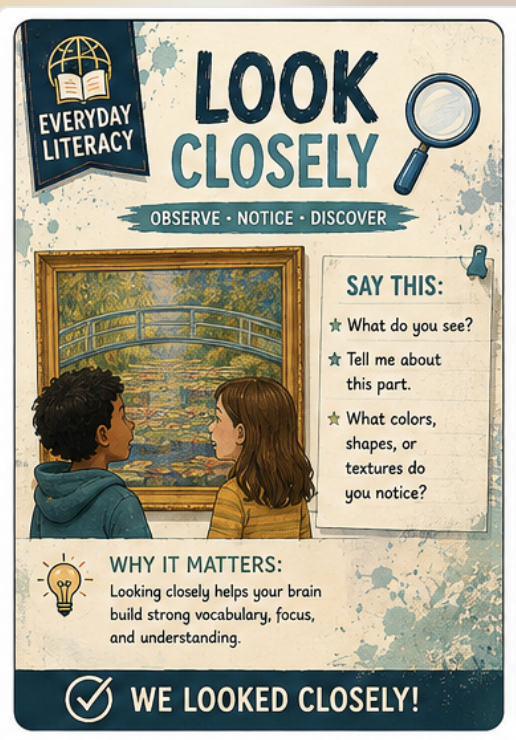
  • Everyday Literacy card: Look Closely — observe, notice, discover.

    Look Closely

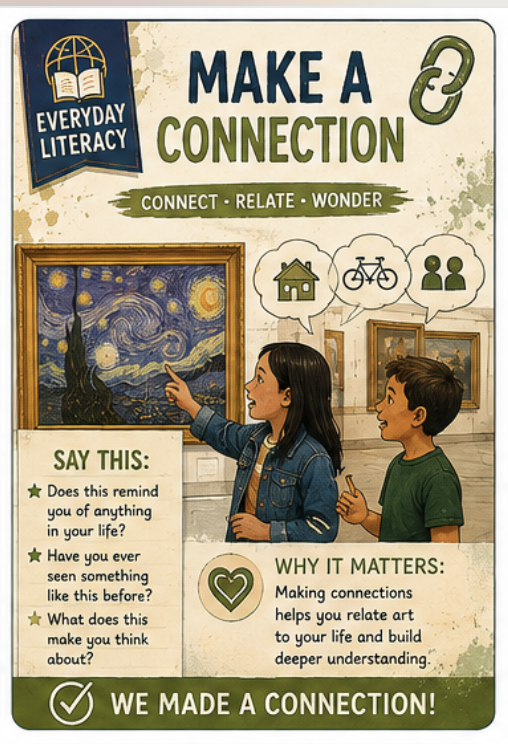
  • Everyday Literacy card: Make a Connection — connect, relate, wonder.

    Make a Connection

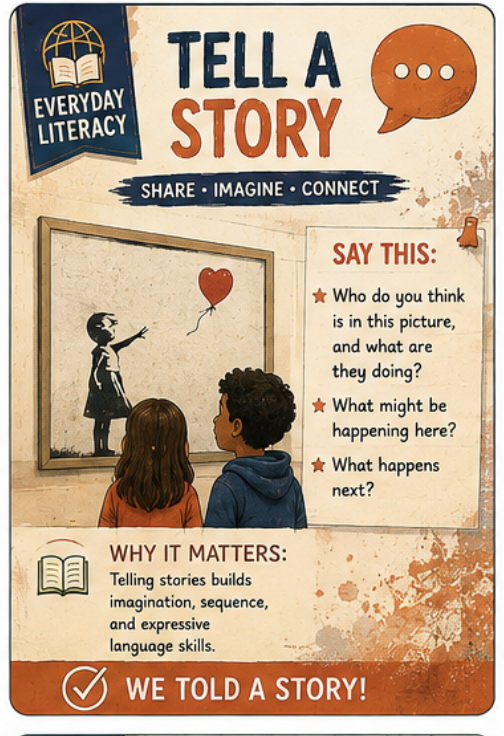
  • Everyday Literacy card: Tell a Story — share, imagine, connect.

    Tell a Story

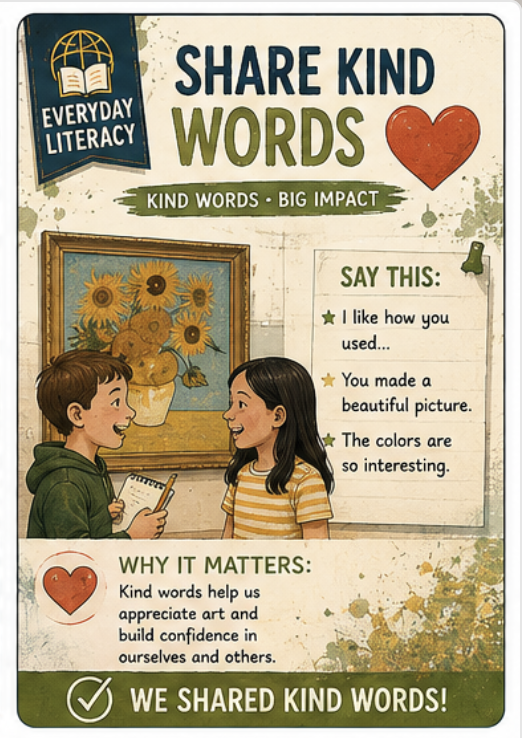
  • Everyday Literacy card: Share Kind Words — kind words, big impact.

    Share Kind Words

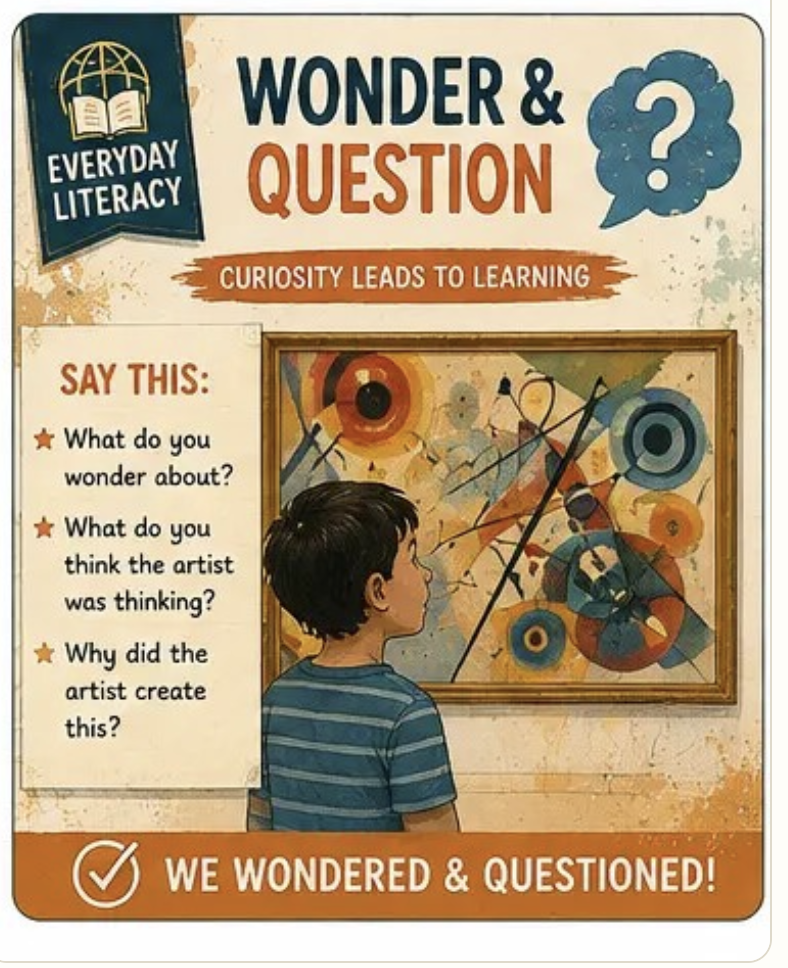
  • Everyday Literacy card: Wonder & Question — curiosity leads to learning.

    Wonder & Question

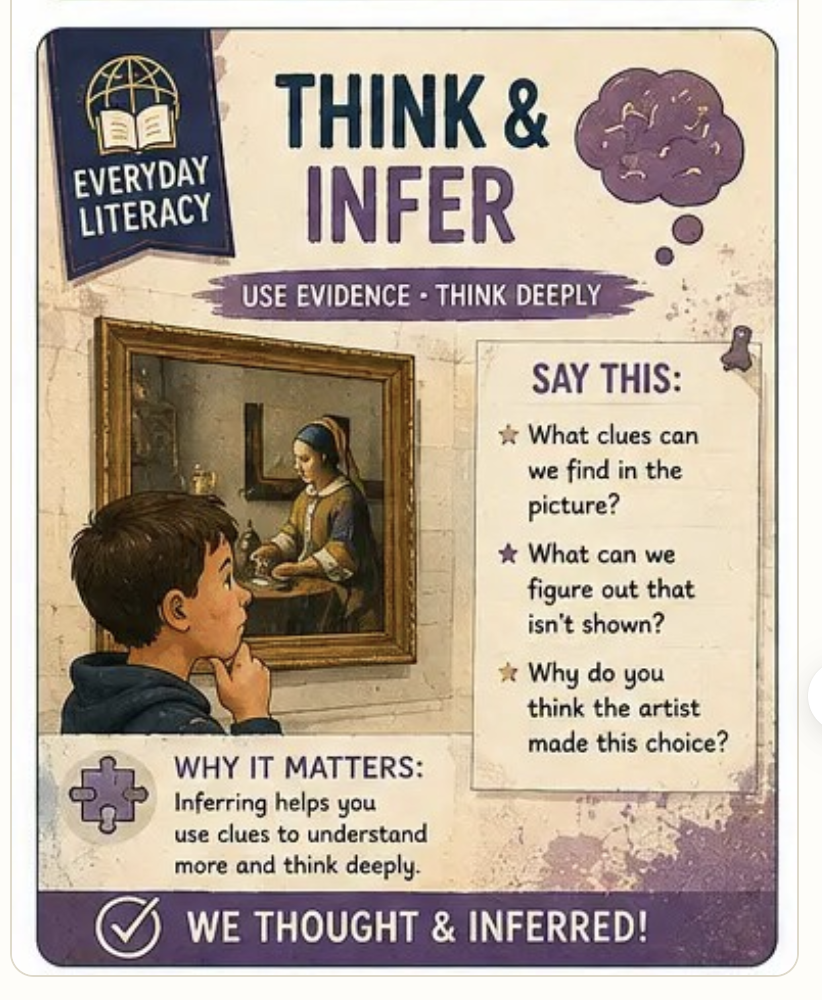
  • Everyday Literacy card: Think & Infer — use evidence, think deeply.

    Think & Infer

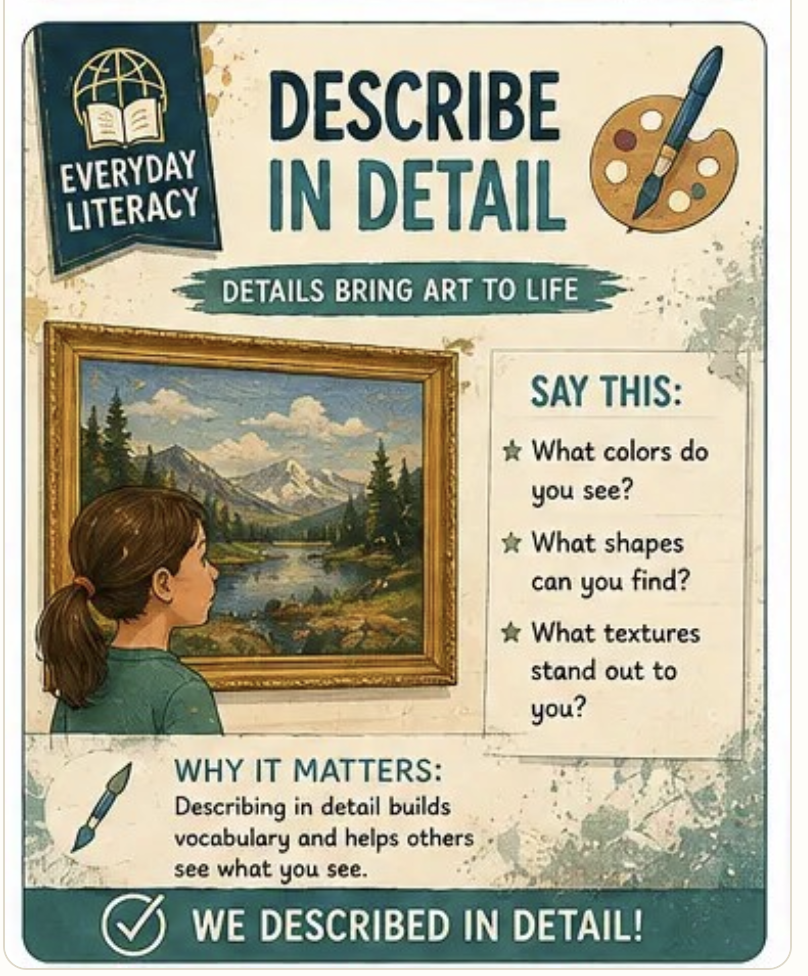
  • Everyday Literacy card: Describe in Detail — details bring art to life.

    Describe in Detail

Choose a developmental band

The artwork stays the same for everyone — only the language of the prompts shifts.

Look Closely

Slow eyes, big noticing

Say this

  • What do you notice first?
  • What colors and shapes do you see?
  • Can you find something tiny?

Try this

Play “I spy” with one artwork — take turns naming something the other person has to find.

Why it matters

Close looking builds attention, observation vocabulary, and the habit of gathering evidence before deciding what something means.

Make a Connection

This reminds me of…

Say this

  • Does this remind you of anything?
  • Have you seen something like this before?
  • Who does this make you think about?

Try this

Share one memory the artwork brings back — the grown-up goes first.

Why it matters

Linking new images to lived experience deepens comprehension and gives children a personal reason to keep talking.

Think & Infer

Clue detective

Say this

  • What do you think is happening?
  • How do you think they feel?
  • What makes you say that?

Try this

Point to the clue that gave you your idea.

Why it matters

Inference — reasoning beyond what is literally shown — is a core comprehension skill that transfers directly to reading.

Tell a Story

Before, now, next

Say this

  • Who might be in this picture?
  • What are they doing?
  • What happens next?

Try this

Take turns adding one sentence to the story.

Why it matters

Narrating builds sentence length, sequencing, and story structure — the oral language foundation for later writing.

Wonder & Question

Big curious brain

Say this

  • What do you wonder?
  • What would you ask the artist?
  • What is puzzling here?

Try this

Ask one wondering question out loud — no answer needed.

Why it matters

Children who generate their own questions monitor meaning more actively — and questions keep the conversation going.

Describe in Detail

Word painter

Say this

  • Is it bumpy or smooth?
  • What color words fit?
  • Is it loud or quiet?

Try this

Describe it with your hands and your voice.

Why it matters

Precise describing grows vocabulary for texture, mood, and movement — words children later recognize in text.

Share Kind Words

Artist appreciation

Say this

  • What do you like about this?
  • What would you tell the artist?
  • What made you smile?

Try this

Give the artwork a silent thumbs-up and say one kind word.

Why it matters

Appreciative talk models specific praise and helps children value the perspectives of artists with many kinds of strengths.

Everyday Literacy at the Art Museum

One artwork, seven ways to talk.

  1. Look Closely
  2. Make a Connection
  3. Think & Infer
  4. Tell a Story
  5. Wonder & Question
  6. Describe in Detail
  7. Share Kind Words

Explore. Connect. Grow together.

Curious where these prompts come from? Read the research behind the cards.